

A neurologist who claims Alzheimer’s is ‘significantly preventable’ has revealed five things people should avoid to help reduce their risk of developing the disease.
‘Pioneering researcher’ Dr David Perlmutter explained that while ‘genetics load the gun, lifestyle pulls the trigger’, many people have been led to believe they have little to no control over their risk of getting Alzheimer’s.
“The destiny of your brain is really based upon how you are choosing to live you life today,” he said during a recent episode of the Diary Of A CEO podcast, after losing his own father to a battle with the disease.
The doctor urged that people ought to know they are in control to a certain degree, listing the top five things that are damaging our brains.

Dr David Perlmutter urged that preventing the disease is within control to a certain degree (@TheDiaryOfACEO/YouTube)
A sedentary lifestyle
The neurologist admitted that ‘being sedentary’ is a ‘huge’ problem for brain function, and ranked it as the number one habit to avoid.
Dr Perlmutter added: “Exercise and movement is a multi-tool for the brain. It targets the function of insulin. It targets inflammation. It targets mitochondrial function. It targets blood flow. These are all hugely important mechanisms in keeping the brain healthy.”
According to a 2023 study, which analysed 49,841 adults aged 60 and over, spending 10 or more hours a day being sedentary was associated with an increased risk of developing dementia.
Lack of social connection

Social isolation can increase the long-term risk of cognitive decline (Getty Stock Images)
In at number two is social isolation, as the expert explained: “When we connect to people and when we develop a relationship, our bodies, our brains, increase the output of a chemical called oxytocin. It’s called the love hormone.
“And this oxytocin stimulates our good brain immune cells, these microglial cells, and helps keep them in their supportive, loving, nurturing role as opposed to letting them drift to becoming what I call the evil twin, increasing inflammation, increasing the destruction of our synapses.”
Poor sleep
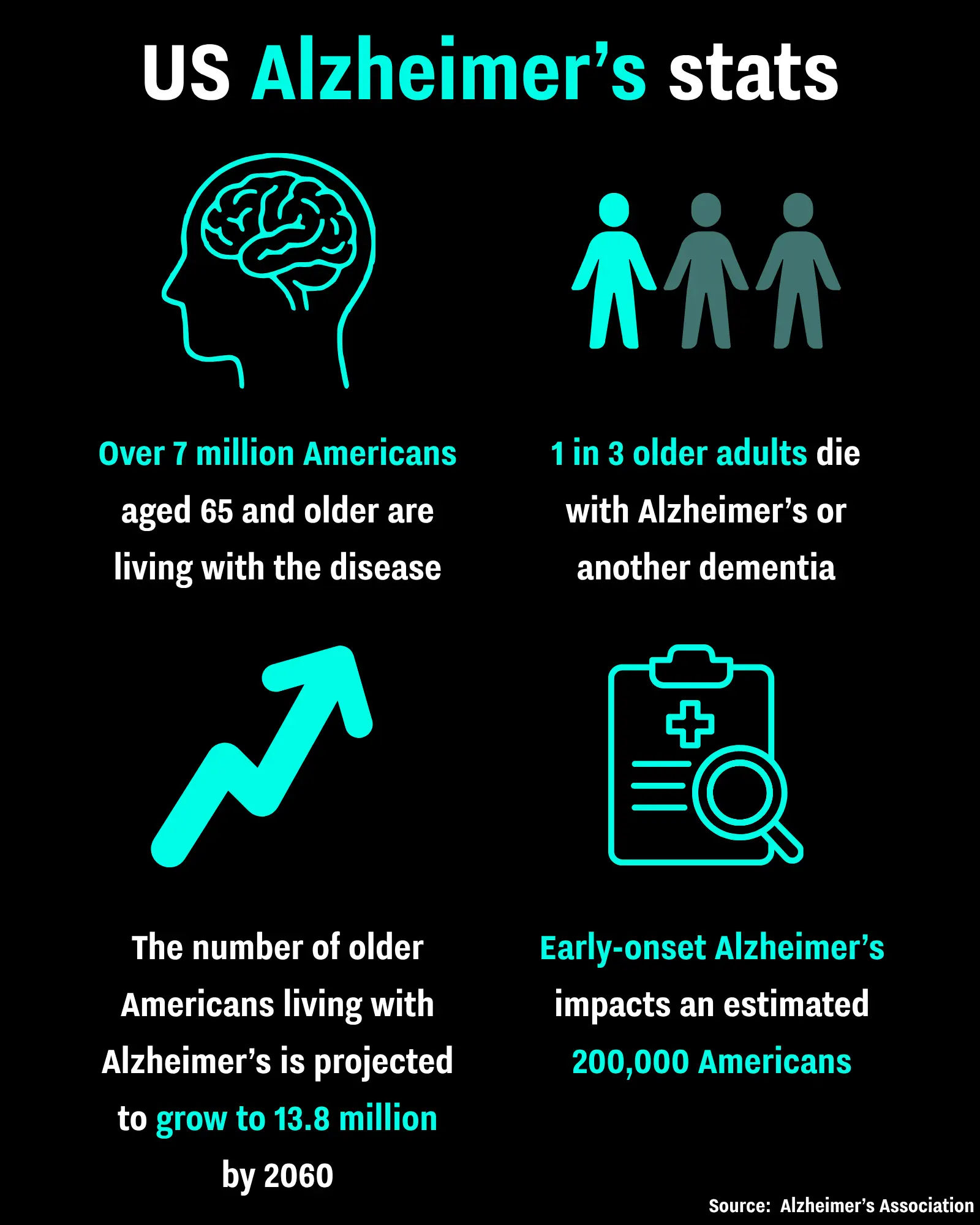
Alzheimer’s disease is one of the leading causes of death in the US (UNILAD)
Dr Perlmutter’s third warning centers on non-restorative sleep, which is ‘when we don’t get enough and it’s not high quality’ – something he says is important to look at when it comes to Alzheimer’s prevention.
He notes that restorative sleep is ‘so important’, allowing us to consolidate memories from the day, and experience REM sleep.
The expert added: “It allows activation of the glymphatic system that allows us to take out the garbage basically, which new research indicates happens when we move as well.”
Dr Perlmutter noted that sleep ‘helps us reduce inflammation and improves insulin functionality’, which are ‘key players that relate to brain function’.
Eating a poor diet

Long-term eating habits can play a major role in your overall brain health (Getty Stock Images)
Having an unhealthy diet is another risk factor Dr Perlmutter highlights, urging that we ‘should do our best to avoid sugar’ in particular.
According to a Nature article, almost 75 percent of the US food supply is estimated as being ultra-processed foods (UPFs).
However, the growing concern is something to take note of, particularly given how a 2026 study looks into the impact UPFs may have on the brain, revealing there is a link between UPF intake and ‘silent strokes in healthy middle-aged adults’.
Relying on medication to solve everything

He listed five ways younger people can help prevent the disease (Getty Stock Images)
Dr Perlmutter further warned that young people should not expect the developments of medicine to protect them from the disease, but should instead try to prevent it as much as possible on their own terms.
If you’ve been affected by dementia or Alzheimer’s and would like to speak with someone in confidence, contact the Alzheimer’s Association via 800.272.3900 open 24 hours seven days a week.