
THE CONDITIONS BEHIND HIS PROMISE
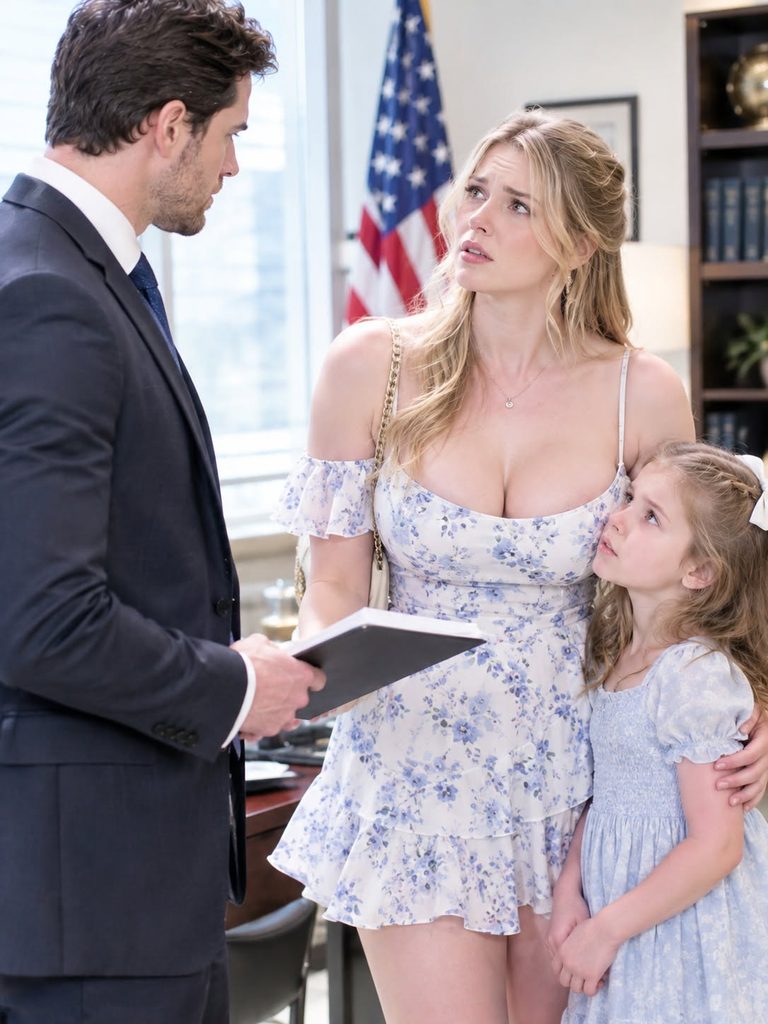
I used to believe there were only two possible reactions when a wife told her husband that she had given birth to another man’s child. He would either become furious, demand answers, and walk away, or he would stay because he loved her enough to forgive something most people would never forgive.
I had prepared myself for both possibilities.
What I had not prepared for was my husband sitting across from me at our kitchen island, listening without interrupting, and responding with a calmness that made me wonder whether he had understood what I had just told him.
“I’ll take full responsibility for the child,” Daniel said. “You don’t have to worry about that.”
For a moment, I couldn’t speak.
I had expected shouting. I had expected him to ask whether I had completely lost my mind. I had even expected him to throw the glass of water sitting beside his hand.
Instead, he folded his hands, looked directly at me, and waited.
I thought I had just been given a second chance.
I didn’t realize I had just agreed to the beginning of something I wouldn’t understand until much later.
My name is Lauren Mitchell, and until that afternoon, I had spent eleven years married to a man who believed that marriage meant building something together.
Daniel was forty-one, a successful commercial property attorney, and the kind of person who rarely made decisions without considering every possible consequence.
He wasn’t particularly romantic, but he was dependable.
He remembered when our insurance payments were due, knew which contractor had repaired the upstairs bathroom, and always made sure our home was maintained even when his work required him to travel.
He had never been the type of husband who bought expensive gifts simply to impress me.
Instead, he paid the mortgage, managed our investments, and made sure we never had to worry about an unexpected bill.
I used to tell my friends that Daniel was predictable.
At the time, I considered that a criticism.
Now, I understand that predictability had been the foundation of everything I eventually lost.
We had been married for eleven years and had spent much of that time discussing whether we wanted children.
Daniel wanted a family.
I kept saying I wasn’t ready.
First, I wanted to travel. Then I wanted to focus on my career. After that, I wanted us to enjoy our marriage before taking on the responsibility of raising someone.
Daniel never forced the issue.
He simply waited.
Eventually, I became the one who suggested that perhaps we should stop trying to plan our lives around a child who might never arrive.
He accepted that, too.
For a while, I convinced myself that we were happy.
Then I met Ryan.
Ryan Carter was a marketing consultant who had been hired to help with a renovation project at one of the commercial properties Daniel’s firm managed.
He was younger than my husband, charming, and remarkably good at making ordinary conversations feel exciting.
He complimented my ideas, asked about my interests, and seemed genuinely fascinated by things Daniel rarely had time to discuss.
At first, I enjoyed the attention.
Then I started looking forward to it.
I told myself it was harmless because nothing had happened yet.
I told myself I was simply enjoying a friendship.
And by the time I finally admitted that I was emotionally involved with another man, I had already crossed boundaries I knew I shouldn’t have crossed.
The affair lasted several months.
I became increasingly careless.
I began inventing reasons to leave the house, hiding messages, and telling Daniel that I had meetings that didn’t exist.
He noticed that something had changed, but he never accused me of anything.
Whenever he asked whether I was happy, I told him I was tired.
Whenever he suggested we take a vacation together, I said I had too much work.
I mistook his patience for ignorance.
Then I discovered I was pregnant.
The pregnancy changed everything.
Ryan initially promised that he would be there for me.
He said we would figure things out, that he needed a little time, and that he wasn’t prepared to make any major decisions while everything was still uncertain.
I believed him.
When I eventually told him that I couldn’t continue pretending the baby belonged to Daniel, Ryan became distant.
His messages grew shorter.
His promises became less specific.
Eventually, he stopped answering my calls.
I was six months pregnant when he told me he needed to step away from the situation.
He said he wasn’t ready to become a father.
He said he didn’t want to destroy his career.
He said he hoped I would understand.
I remember staring at those words on my phone while sitting in my car outside a grocery store.
I had risked my marriage for a man who couldn’t even bring himself to attend an ultrasound appointment.
By then, I had already decided that Daniel would never forgive me.
But I still needed him.
I needed his support, his stability, and the life we had built together.
Most importantly, I needed a way to explain why the baby would arrive without looking anything like the family Daniel had imagined.
I finally told him the truth three weeks before the delivery.
I didn’t tell him everything at once.
I started by saying that I had made a terrible mistake.
Then I admitted that I had been seeing someone else.
Finally, I told him that the baby wasn’t his.
Daniel didn’t speak for nearly a minute.
He looked at the floor, then at the window behind me.
When he eventually asked who the father was, I gave him Ryan’s name.
He nodded once.
That was all.
I cried.
I apologized repeatedly.
I told him I didn’t expect him to forgive me, but I didn’t want to continue lying.
Daniel listened until I had nothing left to say.
Then he stood up, walked to the sink, and washed the coffee cup he had been holding.
I remember thinking that the ordinary sound of running water was somehow more frightening than an argument.
“Is he planning to be involved?” Daniel eventually asked.
I shook my head.
“He doesn’t want anything to do with us.”
Daniel turned off the faucet.
“Us?”
I understood my mistake immediately.
“I mean the baby and me.”
He dried his hands and returned to the table.
“All right.”
I had never heard someone say two words with so little emotion.
That night, Daniel slept in the guest bedroom.
For the next several weeks, we barely discussed the situation.
He continued going to work.
He continued paying the bills.
He even drove me to the hospital when I went into labor.
When our daughter was born, he stood beside the hospital bed and looked at her for a long time.
We named her Sophie.
She had dark hair, a tiny nose, and the same unusual dimple I had noticed in Ryan’s photographs.
Daniel didn’t comment on the resemblance.
He simply asked the nurse whether Sophie was healthy.
I watched him hold her for the first time.
Something inside me softened.
Perhaps he was going to stay.
Perhaps he was capable of loving a child even when the circumstances surrounding her birth were painful.
I wanted to believe that.
Three weeks after we brought Sophie home, I finally asked the question I had been avoiding.
“Would you consider legally adopting her?”
Daniel was sitting in his office reviewing some documents.
He removed his glasses and looked at me.
“Why?”
“Because I want her to have a father. I don’t want her growing up feeling like she doesn’t belong anywhere.”
“Does she have a father?”
I looked down.
“You know what I mean.”
He leaned back.
“Do you want me to adopt her because you believe I should, or because you want to make sure Ryan never becomes part of her life?”
I didn’t answer immediately.
The truth was that I wanted both.
I wanted Daniel to remain her legal father.
I wanted Ryan to disappear.
I wanted our family to look normal again.
“I want us to raise her together,” I said.
Daniel looked at the photograph of Sophie sitting on the desk.
Then he closed the folder he had been reviewing.
“I’ll take full responsibility for the child,” he said. “You don’t have to worry about that.”
My eyes filled with tears.
“Really?”
“Yes.”
I moved toward him, but he raised one hand.
“Before you get excited, there’s something you need to understand.”
He reached into his desk drawer and removed a thick brown folder.
He placed it between us.
“These are the conditions.”
I stared at the folder.
“What conditions?”
“Read everything before you sign anything.”
I opened it.
The first pages contained information about legal adoption, parental responsibilities, and the procedures required to establish Daniel’s legal relationship with Sophie.
Some of the language was difficult to understand.
There were references to biological parentage, consent, custody, financial arrangements, and the possibility of future disputes.
I turned several pages.
Then I found a document concerning our marital property.
I looked up.
“What does this have to do with adopting Sophie?”
“Everything needs to be properly arranged.”
He spoke as if he were explaining a routine business transaction.
I noticed a section concerning separate financial accounts.
Another section described the management of our joint investment portfolio.
A third discussed the ownership of certain properties.
I felt uncomfortable.
“Why are we changing all of this?”
“Because the circumstances have changed.”
“But we’re still married.”
“For now, yes.”
I stopped turning pages.
“What does that mean?”
Daniel looked at me for several seconds.
“It means that if I’m going to assume legal responsibility for Sophie, I need to know exactly what that responsibility involves.”
I wanted to argue.
But the thought of him changing his mind frightened me.
So I kept reading.
There was a section requiring me to provide complete information about the biological father.
There were documents authorizing Daniel’s attorney to communicate with Ryan.
There were also provisions concerning future financial obligations and the protection of assets belonging to our household.
I didn’t understand why everything seemed so complicated.
Daniel explained that the adoption process could become difficult if Ryan later changed his mind.
He said we needed to prevent unnecessary legal disputes.
He said it was better to organize everything now than to deal with a crisis later.
I trusted his judgment.
After all, he was an attorney.
He knew more about legal arrangements than I did.
I signed the preliminary documents.
Daniel watched me carefully.
When I finished, he collected the pages and placed them back inside the folder.
“Thank you,” he said.
That was the moment I believed we had finally moved forward.
I was wrong.
Three days later, my debit card was declined at the grocery store.
I assumed there had been a technical problem.
I tried again.
The cashier looked uncomfortable.
“I’m sorry. It says the transaction can’t be completed.”
I used another card.
That one was declined, too.
When I returned home, I called Daniel.
He answered after the fourth ring.
“My cards aren’t working.”
“I know.”
I froze.
“What do you mean, you know?”
“The accounts have been reorganized.”
“Why?”
“Because we’re moving the household finances into a different structure.”
I looked at the groceries sitting on the counter.
“You could have told me.”
“I thought I had explained that the financial arrangements would change.”
“You said the investments would be reorganized. You didn’t say I wouldn’t be able to use our money.”
There was a pause.
“Lauren, you’re not being cut off from necessities. Your personal spending account is being established separately.”
“When?”
“Tomorrow.”
I almost laughed.
“Tomorrow? What am I supposed to do today?”
“Use the household card I left in the kitchen drawer.”
I found it beneath a stack of mail.
It worked.
But it had a spending limit.
A very small one.
I called Daniel again, but he was already in a meeting.
That evening, I confronted him.
He remained calm.
He explained that our joint accounts were being reviewed by his financial adviser and that the changes were temporary.
He said it was necessary to establish a clear record of expenses while the adoption process was underway.
I asked whether he thought I was going to steal from him.
He looked at me.
“No. I think we need to stop pretending that everything is still arranged the way it was before.”
I didn’t know how to respond.
The next morning, his attorney called.
Her name was Evelyn Brooks.
She had represented Daniel in several business matters, although I had only met her twice.
She introduced herself politely and asked whether I had time to review some additional documents.
I told her I wanted to speak with Daniel first.
She said that was perfectly reasonable.
Then she added something that made my stomach tighten.
“Mr. Mitchell has instructed me to handle all communications regarding the adoption and the associated financial arrangements.”
“Why can’t he handle those conversations himself?”
“Because he believes it would be better for both parties to have independent legal guidance.”
Both parties.
I had never heard anyone describe Daniel and me that way.
I asked what she meant.
Evelyn explained that the adoption involved several separate legal issues and that she wanted to ensure I understood my rights before proceeding.
She also recommended that I obtain my own attorney.
I thought she was exaggerating.
I had nothing to hide.
Daniel was my husband.
We were simply trying to give a little girl a stable home.
I told her I would consider it.
That afternoon, I discovered that my access to our investment account had been removed.
I couldn’t view the balance.
I couldn’t transfer money.
I couldn’t even see the transaction history.
When I asked Daniel about it, he said the account was being transferred to a new management arrangement.
I began to feel as though I was living in a house that belonged to someone else.
The furniture was still mine.
My clothes were still in the closets.
My daughter’s crib was still beside our bedroom window.
But every important decision seemed to be happening somewhere beyond my reach.
A week after the original conversation, Evelyn arrived at our house.
She brought another folder.
This one was thinner.
She placed it on the dining table and asked me to read the first page.
It was a proposed agreement concerning the legal adoption of Sophie.
Daniel was listed as the intended adoptive parent.
I was listed as the child’s biological mother.
The agreement included provisions concerning parental responsibility, decision-making authority, financial support, and the protection of Sophie’s long-term interests.
I read the first few paragraphs.
Then I noticed a section titled FINANCIAL RESPONSIBILITY.
I looked at Evelyn.
“Why does this document discuss my personal assets?”
“Because the parties need to understand how the child’s needs will be supported.”
“But Daniel is adopting her.”
“Yes.”
“Then why am I being asked to disclose my income and financial obligations?”
Evelyn folded her hands.
“Because adoption doesn’t automatically eliminate a biological parent’s responsibilities.”
I frowned.
“Daniel said he would take full responsibility.”
“He intends to provide Sophie with a stable home and assume the legal obligations available through the adoption process. That does not mean every other legal responsibility disappears.”
I looked at the document again.
There was a reference to the biological father’s consent.
There was also a section addressing the possibility that the adoption might not proceed.
“Has Ryan signed anything?”
Evelyn paused.
“Not yet.”
“Why not?”
“Your husband requested that we establish the appropriate legal framework before contacting him formally.”
I felt a sudden wave of anger.
“Why is everyone making decisions without telling me?”
Evelyn’s expression remained professional.
“Lauren, I don’t want you to feel excluded. But I strongly recommend that you obtain independent legal advice before signing any additional documents.”
After she left, I called Daniel.
He didn’t answer.
I sent him several messages.
He replied almost two hours later.
WE’LL DISCUSS EVERYTHING TONIGHT.
He arrived home after nine.
I was sitting in the living room with Sophie asleep against my shoulder.
I placed her in the crib and walked downstairs.
“What is happening?”
Daniel removed his jacket.
“Which part?”
“All of it.”
He looked tired.
“The adoption?”
“The money. The lawyer. The accounts. The documents. Why am I being treated like someone you’re negotiating against?”
He didn’t respond immediately.
Then he said, “Because I don’t want us making emotional decisions that create problems for Sophie later.”
I stared at him.
“Are you trying to take her away from me?”
“No.”
“Then why does it feel like you’re taking everything away from me?”
He rubbed his forehead.
“Lauren, I am trying to make sure that Sophie has a secure future.”
“And what about me?”
He looked at me for a long time.
“That’s the question you should have asked yourself before everything happened.”
The words were quiet.
They were also the first thing he had said that truly sounded angry.
I went upstairs without answering.
That night, I barely slept.
For the first time, I wondered whether Daniel’s calmness had never been forgiveness at all.
Perhaps it had simply been preparation.
The following morning, I contacted a family law attorney named Michael Harris.
I found him through a recommendation from a former colleague.
He agreed to meet me that afternoon.
I brought every document Daniel had given me.
Michael spent nearly an hour reviewing the papers.
He didn’t interrupt.
He didn’t criticize me.
He simply made notes and occasionally asked me to explain how Daniel had described a particular provision.
When he finally looked up, his expression had changed.
“Did you read these documents before signing the preliminary acknowledgments?”
“Yes, but I didn’t understand everything.”
“Did anyone explain the financial implications?”
“Daniel said it was part of organizing the adoption.”
Michael nodded slowly.
“Some of these arrangements may be reasonable. Others need to be examined very carefully.”
“Does he have the right to move our money without telling me?”
“That depends on how the accounts are titled, what agreements exist, and what authority each person has.”
I felt my throat tighten.
“Can he adopt Sophie without Ryan’s consent?”
“That depends on the applicable law and the circumstances surrounding the biological father’s parental rights. We need to examine that before assuming anything.”
I looked at him.
“Daniel promised to take responsibility.”
Michael closed the folder.
“Lauren, a promise and a legal obligation are not the same thing.”
I wanted to cry.
Instead, I asked him to explain the documents.
He spent the next two hours doing exactly that.
Some provisions were designed to establish a clear financial structure for Sophie.
Others addressed how our existing property would be managed if Daniel and I separated.
One section discussed the possibility of a future divorce.
I stared at the page.
“Why would he include this?”
Michael didn’t speculate.
“Because someone wanted the possibility of separation addressed before the adoption moved forward.”
I left his office feeling as though the ground beneath my feet had shifted.
I drove home and waited for Daniel.
When he arrived, I placed Michael’s business card on the kitchen island.
“I hired a lawyer.”
Daniel glanced at it.
“Good.”
I blinked.
“Good?”
“Yes.”
“You don’t mind?”
“Why would I mind?”
“Because you wanted your lawyer to handle everything.”
“I wanted Evelyn to handle the legal process. I never said you shouldn’t have your own attorney.”
I studied his face.
He seemed genuinely unsurprised.
“Did you expect me to find one?”
“I hoped you would.”
“Why?”
Daniel placed his keys beside the fruit bowl.
“Because I wanted you to understand what you were signing.”
I felt anger rising inside me.
“Then why didn’t you explain the whole thing?”
“I gave you the documents.”
“That’s not the same as explaining them.”
“No,” he said quietly. “It isn’t.”
For a moment, I thought he might apologize.
He didn’t.
Instead, he asked whether Michael had reviewed the adoption provisions.
I told him yes.
“Then you should listen to him.”
I couldn’t believe what I was hearing.
“Daniel, are you trying to end our marriage?”
He looked toward the staircase.
Sophie had started crying.
He waited until the sound stopped before answering.
“I haven’t decided what our marriage will look like.”
That was not an answer.
But it was the closest thing to one I had received.
Over the next several days, the situation became more complicated.
Daniel continued to provide for Sophie.
He paid for her pediatric appointments, purchased a new car seat, and arranged for a professional to install additional safety equipment in the house.
He even began waking up early to prepare her bottles when I was exhausted.
If someone had watched us from outside, they might have believed we were a perfectly ordinary family.
But behind closed doors, everything was changing.
Daniel stopped discussing our future.
He no longer asked whether I wanted to travel during the holidays.
He stopped using the word “we” when talking about financial decisions.
And whenever I asked about the adoption, he referred me to Evelyn.
Then, one Thursday afternoon, Evelyn called with an unexpected update.
“Ryan has been contacted.”
I sat down.
“What did he say?”
“He has agreed to participate in a preliminary discussion.”
“Does he want to meet Sophie?”
“That isn’t clear yet.”
I felt both relief and fear.
I had spent months wishing Ryan would disappear.
Now the thought of him suddenly returning made me uncomfortable.
“Did Daniel tell him everything?”
“Your husband provided the relevant information.”
“What information?”
“That depends on which information you’re referring to.”
I heard papers moving on the other end.
Then Evelyn said something that made my heart beat faster.
“Ryan also requested a copy of the proposed adoption arrangements.”
I immediately called Daniel.
He answered.
“Why did you send Ryan the documents?”
“Because he is the biological father.”
“You told me he wasn’t going to be involved.”
“He told you that. I didn’t.”
I gripped the phone.
“Are you trying to bring him back into our lives?”
“No.”
“Then what are you doing?”
“Establishing the facts.”
I wanted to accuse him of deliberately making everything worse.
But I remembered Michael’s warning.
A promise and a legal obligation were not the same thing.
I asked Daniel whether he still intended to adopt Sophie.
He said yes.
Then he added, “But I won’t make that decision based on what you want me to believe. I’ll make it based on what is actually best for her.”
That evening, I received an email from Ryan.
It was only three sentences long.
He said he had been contacted by Daniel’s attorney.
He said he was willing to discuss the situation.
And he said there was something about the adoption documents that I needed to understand before I signed anything else.
I called him immediately.
He didn’t answer.
I sent another message.
He replied the following morning.
WE SHOULD TALK IN PERSON. THERE’S SOMETHING I DIDN’T KNOW WHEN I LEFT.
I stared at the screen.
For several minutes, I couldn’t decide whether to call him again or block his number.
Then another message arrived.
DANIEL ALREADY KNOWS.
I felt sick.
What did Daniel know?
What had Ryan told him?
And why was I apparently the last person to understand what was happening?
I confronted Daniel that night.
He was in his office, reviewing a document on his laptop.
I stood in the doorway.
“What did Ryan tell you?”
Daniel looked up.
“About what?”
“Don’t do that.”
He closed the laptop.
“Sit down.”
I remained standing.
“Ryan says you know something.”
Daniel nodded.
“Yes.”
“What?”
He looked at me.
“That isn’t a conversation we should have without your attorney present.”
I laughed bitterly.
“My attorney? Why does everything require a lawyer now?”
“Because this is no longer a simple disagreement between two people.”
“What does that mean?”
Daniel took a slow breath.
“It means that there are questions about paternity, financial responsibility, and the circumstances surrounding the pregnancy that need to be answered accurately.”
I felt my stomach tighten.
“What questions?”
He opened a drawer and removed a smaller envelope.
He placed it on the desk.
Inside was a printed email.
It was from Ryan.
The subject line read: INFORMATION REGARDING THE PREGNANCY.
I recognized the date.
It was from nearly two months before I had told Daniel about the affair.
I read the first paragraph.
Then I read it again.
Ryan had written that he had doubts about the timeline of the pregnancy.
He had also written that he had discussed those doubts with someone before leaving.
I looked up.
“Who?”
Daniel didn’t answer immediately.
Then he said, “My attorney.”
I stared at him.
“You knew?”
“I knew there were inconsistencies.”
“What inconsistencies?”
He pointed toward the envelope.
“Read the rest.”
The email contained several references to dates.
The date of my last menstrual cycle.
The date of the first ultrasound.
The date Ryan and I had been together.
And the date I had told Daniel that the affair had ended.
I felt my face grow hot.
I had never expected Ryan to preserve those details.
I had certainly never expected him to share them with my husband’s attorney.
But there was something else.
At the bottom of the email, Ryan had written:
I AM NOT CERTAIN I AM THE BIOLOGICAL FATHER.
I put the paper down.
Daniel watched me.
“Why didn’t you tell me?”
“Because I wanted the information verified.”
“Verified how?”
“Through the appropriate legal process.”
I felt dizzy.
“Are you saying Sophie might not be Ryan’s child?”
“I’m saying we need accurate information.”
I looked at the envelope.
“Then whose child is she?”
Daniel didn’t answer.
For the first time in eleven years, I saw something in his expression that I couldn’t interpret.
It wasn’t anger.
It wasn’t sadness.
It was uncertainty.
And somehow, that frightened me more than anything else.
I returned to my attorney the following morning.
Michael listened carefully as I explained Ryan’s email.
He recommended that no further documents be signed until the parentage issue was resolved.
He also advised me to preserve every message and avoid making assumptions about what anyone had or had not established.
I agreed.
For the first time, I was no longer willing to let Daniel’s confidence substitute for my understanding.
Two days later, Evelyn scheduled a meeting.
Daniel attended.
I attended with Michael.
Ryan joined by video conference.
The atmosphere was painfully formal.
Evelyn began by explaining the purpose of the meeting.
She said they needed to establish the relevant facts before proceeding with the adoption.
Then she displayed a timeline.
I recognized the dates immediately.
But one of them was wrong.
I leaned forward.
“That isn’t the date I gave you.”
Evelyn looked at me.
“Which date?”
“The date of the first appointment.”
She checked her notes.
I explained that the appointment had taken place one week later than the timeline indicated.
Ryan looked away from the camera.
Daniel remained still.
Evelyn corrected the information.
Then she asked Ryan whether he had any additional concerns.
Ryan cleared his throat.
“I want to explain something.”
I felt my hands become cold.
“When Lauren told me she was pregnant, I assumed the child was mine. I didn’t question it at first.”
He paused.
“But later, I realized the dates didn’t make sense.”
I stared at him.
“You never told me that.”
“I tried.”
“No, you didn’t.”
“I sent you messages.”
“You said you needed time.”
“I did need time.”
I felt anger building.
“You left me alone.”
Ryan lowered his eyes.
“I know.”
Daniel interrupted.
“We aren’t here to discuss the relationship.”
Ryan nodded.
“Right.”
Then he said something I hadn’t expected.
“There’s another reason I agreed to this meeting.”
Evelyn looked at him.
“Go ahead.”
Ryan took a breath.
“Before I left, Lauren told me that Daniel had been unable to have children.”
I turned toward him.
“What?”
Ryan continued.
“She said you had been told that there was almost no chance you could become a biological father.”
I felt my face drain of color.
I had never told Ryan that.
Because it wasn’t true.
Daniel and I had discussed the possibility of fertility problems years earlier, but neither of us had received a definitive diagnosis.
Ryan was looking directly at me now.
“That’s what you told me.”
I shook my head.
“You’re lying.”
He didn’t respond.
Daniel looked at me.
And suddenly, I understood why he had been so careful about every document.
He wasn’t simply trying to organize an adoption.
He was trying to establish exactly what I had told each person, and when.
The meeting ended without an agreement.
But the questions remained.
That night, Daniel slept in the guest room again.
I stayed awake until morning.
I kept thinking about Ryan’s words.
I had told him Daniel couldn’t have children.
Why had I said that?
I tried to remember the conversation.
It had happened during the early months of the affair, when Ryan had asked whether Daniel and I planned to have a family.
I remembered telling him that children were unlikely.
I remembered saying Daniel had accepted it.
But I couldn’t remember telling him that Daniel was medically unable to become a father.
The next morning, I asked Daniel to speak with me.
He agreed.
We sat in the living room while Sophie slept upstairs.
I asked him whether he had ever received a medical diagnosis that made biological fatherhood impossible.
He looked at me.
“No.”
“Then why did Ryan believe that?”
“That’s something you should ask Ryan.”
“I am asking you.”
Daniel folded his hands.
“Lauren, there is something I need you to understand. I am not interested in proving that you’re a bad person. I am interested in making sure Sophie doesn’t become the center of a conflict that adults should have handled honestly.”
I looked away.
“Do you still want to adopt her?”
He took a moment.
“Yes.”
My eyes filled.
“Then why are you doing all this?”
“Because adopting a child is not the same as pretending the circumstances surrounding her birth never happened.”
I wanted to tell him that I loved him.
I wanted to promise I would change.
But the words felt meaningless.
Instead, I asked the question that had been haunting me.
“Are you planning to divorce me?”
Daniel looked toward the staircase.
“I’ve spoken to an attorney about what a separation would involve.”
My chest tightened.
“So that’s it?”
“I haven’t filed anything.”
“But you’ve considered it.”
“Yes.”
I began crying.
Daniel didn’t move closer.
He didn’t tell me everything would be all right.
He simply sat there until I stopped.
Then he said, “There is one more document I want you to read.”
He went upstairs and returned with a sealed envelope.
He placed it on the coffee table.
“This was prepared before Sophie was born.”
I stared at him.
“What is it?”
“Something I should have told you earlier.”
I opened the envelope.
Inside was a letter from a fertility clinic.
It was dated nearly four years earlier.
The letter confirmed that Daniel had undergone testing as part of a fertility assessment.
His results had been within the expected range.
I looked up.
“Why are you showing me this?”
“Because I want you to understand that I never told you I couldn’t have children.”
I felt something collapse inside me.
I had spent years telling myself that Daniel didn’t care about having a child.
I had convinced myself that his silence meant he had accepted a life without one.
But he had been tested.
He had wanted to know.
And I had never asked what the results were.
“Why didn’t you tell me?”
“I did.”
I shook my head.
“No, you didn’t.”
Daniel looked at me with an expression I had never seen before.
“I told you the results were normal. You said you weren’t ready to discuss children and asked me not to bring it up again.”
I remembered the conversation.
I remembered being irritated.
I remembered telling him that we had already discussed it.
I remembered walking away.
But I hadn’t remembered the medical results.
The realization made me feel smaller than I had ever felt.
Daniel had wanted a child.
I had simply never wanted to hear how much.
The following week, the adoption process was temporarily paused.
Michael recommended that we obtain independent confirmation of the biological relationship before making any permanent decision.
Daniel agreed.
Ryan agreed, too.
The testing process was arranged through the appropriate legal channels.
I hated every minute of it.
I hated the appointments.
I hated the forms.
I hated the fact that strangers were discussing my daughter’s biological identity as though she were a case number.
But most of all, I hated waiting.
Daniel continued caring for Sophie.
He gave her bottles, changed her clothes, and spent hours walking around the living room when she couldn’t sleep.
Sometimes I watched him from the hallway.
He was gentle with her.
He never treated her differently because of what had happened.
And that made his distance from me even harder to bear.
Then the preliminary results arrived.
Evelyn called Michael.
Michael called me.
He asked me to come to his office.
I knew immediately that something had happened.
When I arrived, he closed the door and asked me to sit down.
“The results have been received,” he said.
I gripped the arms of the chair.
“And?”
He looked at the document.
“Ryan is not the biological father.”
I stared at him.
For several seconds, I couldn’t understand the words.
“That’s impossible.”
“The report indicates that he is not the biological parent.”
“Then who is?”
Michael looked at me.
“The results do not identify the biological father beyond the individuals included in the testing.”
I felt sick.
“Who else would it be?”
He didn’t speculate.
I drove home without remembering most of the journey.
Daniel was in the kitchen when I arrived.
He took one look at my face.
“They came back?”
I nodded.
He turned off the stove.
“Ryan?”
“He’s not the father.”
Daniel closed his eyes briefly.
Then he asked, “What do you want to do now?”
I began crying.
“I don’t know.”
He pulled out a chair.
“Sit down.”
I sat.
For a long time, neither of us spoke.
Then I remembered something.
There had been another man.
Not Ryan.
Someone from a period before the affair became serious.
Someone I had met at a professional event.
We had spoken several times.
We had exchanged messages.
But I had never considered that encounter significant enough to mention.
I tried to reconstruct the timeline.
My hands began shaking.
Daniel noticed.
“Lauren?”
I looked at him.
“I need to check something.”
I went upstairs and opened my old email account.
I searched through archived messages.
I found a conversation.
Then another.
And finally, a calendar entry from the month before I discovered the pregnancy.
The name was Ethan Brooks.
He had been a consultant who attended the same professional event where I first met Ryan.
I remembered that night.
I remembered drinking too much.
I remembered leaving the event with Ethan.
I remembered telling Daniel afterward that I had stayed with colleagues.
I had never admitted what happened.
I sat on the floor beside the desk.
For nearly an hour, I couldn’t move.
When I finally went downstairs, Daniel was waiting.
I told him everything.
Not just about Ryan.
Not just about the affair.
Everything.
He listened.
When I finished, he looked exhausted.
“Have you contacted Ethan?”
“No.”
“Then don’t.”
I stared at him.
“Why?”
“Because we need to proceed carefully.”
I wanted him to explain.
He didn’t.
Instead, he said he would ask Evelyn to arrange the next appropriate steps.
I began to understand something.
Daniel wasn’t reacting to each new revelation.
He was preparing for each one.
The next few days passed in a blur.
Ethan was contacted through the legal process.
He initially denied having any knowledge of the pregnancy.
But when the dates were presented, he agreed to participate in testing.
This time, the result was different.
Ethan was confirmed as Sophie’s biological father.
I read the report three times.
I had never told Daniel about Ethan.
I had never told Ryan about Ethan.
And now the truth was sitting in front of us in a document that couldn’t be explained away.
Daniel read the report silently.
Then he placed it on the table.
“All right.”
I looked at him.
“That’s all you have to say?”
“What would you like me to say?”
“I don’t know. Something.”
He stared at the report.
“I think I’ve said enough.”
I started crying again.
Daniel stood.
“I’ll take Sophie upstairs.”
He picked her up and walked away.
I remained at the table.
That night, I received an email from Evelyn.
It contained an updated proposal.
Daniel still intended to proceed with the adoption.
But the arrangements were different now.
The documents addressed Ethan’s legal position.
They also established a framework for Sophie’s financial security, healthcare, education, and future inheritance.
There were provisions concerning the possibility that Daniel and I would no longer live together.
I read that section carefully.
It stated that Daniel intended to assume parental responsibility for Sophie independently of the continuation of our marriage, subject to the legal requirements and the necessary approvals.
I couldn’t understand why he would want that.
If he divorced me, why would he continue raising another man’s child?
I called him.
He answered from his office.
“Why are you still doing this?”
“Doing what?”
“Adopting Sophie.”
“Because I want to.”
“But you don’t want to stay married to me.”
There was a pause.
“Those are two different decisions.”
I closed my eyes.
“How can you separate them?”
“Because Sophie didn’t make the decisions that brought her into this situation.”
His answer was simple.
And it hurt more than I expected.
I had assumed that if Daniel stopped loving me, he would eventually stop loving the child, too.
But he was showing me that the two things had never been connected in the way I had imagined.
The next meeting took place at Evelyn’s office.
Ethan attended with his own attorney.
Ryan was also present because he needed to confirm certain information concerning his previous statements and the timeline.
The atmosphere was tense.
Evelyn explained that the confirmed parentage results had changed the legal framework.
She said Ethan’s participation was necessary to resolve the remaining parental questions.
Ethan looked uncomfortable.
He had a wife and two children.
He said he didn’t want to become involved in a situation that would affect his family.
I looked at him.
“You think I wanted this?”
He lowered his eyes.
Daniel interrupted.
“We are not here to argue about the past.”
Ethan nodded.
Then he asked a question that surprised everyone.
“Why does Daniel want to adopt her?”
Evelyn looked toward Daniel.
Daniel answered himself.
“Because she needs a parent who will show up.”
Ethan frowned.
“She’s your wife’s child.”
“She’s a child.”
“That doesn’t explain why you’d take responsibility for someone else’s mistake.”
Daniel looked at him.
“You’re right. It doesn’t.”
He paused.
“But it explains why I won’t make her pay for it.”
Nobody spoke.
For the first time, I understood that Daniel’s decision had nothing to do with proving he was a better man than Ethan or Ryan.
He wasn’t competing with them.
He was deciding what kind of father he wanted to be.
The meeting continued.
Ethan was informed of the legal process and the decisions he needed to make.
No one promised him that everything would be simple.
No one told him that he could disappear without consequences.
But Daniel was willing to proceed with adoption if the legal requirements were satisfied and the arrangement protected Sophie’s interests.
I watched him sign the preliminary acknowledgment.
His hand didn’t shake.
Mine did.
After the meeting, I followed him into the hallway.
“Daniel, can we talk?”
He stopped.
“About what?”
“Us.”
He looked at me.
I began explaining that I knew I had made terrible decisions.
I said I was willing to attend counseling.
I said I wanted to rebuild our marriage.
I told him that I didn’t expect everything to return to normal immediately.
I just wanted a chance.
Daniel listened.
Then he asked, “Do you want to rebuild our marriage because you love me, or because you’re frightened of losing the life I provided?”
The question silenced me.
I wanted to say it was because I loved him.
But I couldn’t ignore the second part.
I was frightened.
I was frightened of losing our house.
I was frightened of losing our financial security.
I was frightened of raising a child alone.
I was frightened that people would eventually learn the truth.
And I was frightened that the man who had once promised to take care of me would no longer be there.
Daniel seemed to understand.
“Take some time,” he said.
Then he walked away.
A few days later, I received a formal notice from Evelyn.
Daniel had decided to begin a structured separation.
The notice explained that the existing financial arrangements would remain in place while the legal process was reviewed.
It also stated that Sophie would continue living in the family home during the transition.
Daniel had not requested that I leave immediately.
He had not attempted to remove Sophie from my care.
He had simply established boundaries.
I was given a separate account for personal expenses.
Our joint assets were being reviewed.
And all major financial decisions would require proper documentation.
I felt humiliated.
I had once believed that I could spend money without thinking because Daniel would always make sure there was enough.
Now I had to review every expense.
I began looking at the household budget.
For the first time, I understood how much Daniel had been managing.
Mortgage payments.
Insurance.
Property taxes.
Investment contributions.
Maintenance expenses.
The cost of keeping our home running was far greater than I had imagined.
I had enjoyed the results without understanding the work behind them.
But there was another surprise.
Daniel had not transferred the family assets into his personal accounts.
The documents showed that the money was being placed under a separate management structure with provisions for the legal ownership and protection of both parties.
Some assets were jointly owned.
Others had been acquired before our marriage.
Some investments were connected to business entities I had never understood.
I had assumed everything belonged to us equally.
That assumption was not supported by every document.
Michael explained that we needed a complete accounting before determining what I was entitled to.
I hated hearing that.
I had spent years referring to Daniel’s success as our success.
But now I was discovering that emotional ownership and legal ownership were not always the same thing.
The adoption process continued.
Daniel visited Sophie’s pediatrician.
He attended appointments.
He researched childcare options.
He even arranged for a college savings account to be established for her future, subject to the appropriate legal and financial requirements.
I watched him do all of this while barely speaking to me.
Sometimes I wanted to ask whether he was doing it to punish me.
But whenever I saw him holding Sophie, I knew that wasn’t the answer.
One evening, I found him sitting beside her crib.
She was asleep.
He was holding a small photograph of himself as a baby.
I stood in the doorway.
“What’s that?”
He looked up.
“My mother sent it.”
I walked closer.
The photograph showed Daniel as an infant, wrapped in a pale blue blanket.
He looked remarkably like Sophie.
“She looks like you,” I said.
Daniel studied the photograph.
“She looks like a baby.”
I smiled weakly.
Then he placed the picture on the table.
“Lauren, there’s something else.”
I felt my stomach tighten.
“What?”
He reached into the drawer beside the crib.
He removed another document.
It was a letter from his mother.
She had written it after hearing about Sophie’s birth.
The letter was warm and affectionate.
She said she wanted to meet her granddaughter.
I looked at Daniel.
“Your mother knows?”
“Yes.”
“What did you tell her?”
“The truth.”
I felt embarrassed.
“What did she say?”
Daniel handed me the letter.
I read it slowly.
His mother wrote that she had been shocked by the circumstances, but that a child should never be blamed for the choices of adults.
She said she hoped Daniel would make decisions he could live with.
At the bottom, she had added one sentence.
PLEASE DON’T LET YOUR PAIN TURN INTO SOMETHING THE CHILD HAS TO CARRY.
I began crying.
Daniel looked away.
For a moment, I wanted to reach for his hand.
But I didn’t.
The following weekend, his mother visited.
She brought a small knitted blanket for Sophie.
She held the baby carefully and kissed her forehead.
Then she looked at me.
I expected anger.
Instead, she asked whether I had been sleeping.
I almost broke down.
She didn’t excuse what I had done.
She didn’t tell me everything would be forgiven.
But she didn’t treat Sophie as though she were a reminder of something shameful.
That evening, after she left, I found a note beside the blanket.
It said:
SOPHIE DESERVES TO GROW UP KNOWING SHE WAS LOVED, NOT KNOWING SHE WAS THE REASON TWO ADULTS COULDN’T FORGIVE EACH OTHER.
I kept that note.
It became the first thing I placed in Sophie’s memory box.
Several weeks passed.
The adoption paperwork moved forward.
The court required the necessary consents, background information, and supporting documents.
Daniel completed every requirement.
I completed mine.
Ethan’s legal position was addressed through his attorney.
Ryan formally confirmed that he was not Sophie’s biological father and had no parental claim arising from the relationship.
It was a strange experience watching the two men who had once occupied so much of my life become names in legal documents.
Neither of them had been prepared to raise Sophie.
Neither of them had been willing to provide the stability she needed.
Daniel had not created the situation.
Yet he was the one doing the work.
One afternoon, Michael called to tell me that the final adoption hearing had been scheduled.
I felt a mixture of relief and fear.
I asked whether Daniel would still proceed.
Michael said that, based on the latest communications, Daniel intended to move forward.
I asked whether the adoption meant our marriage would be saved.
Michael was silent for a moment.
“Those are separate legal matters, Lauren.”
I knew that.
But I still wanted someone to tell me otherwise.
The night before the hearing, I found Daniel in the kitchen.
He was reviewing a document.
I sat across from him.
“Are you nervous?”
“A little.”
“About the hearing?”
“About making sure everything is right.”
I looked at his hands.
They were steady.
“Do you ever regret it?”
He looked up.
“Regret what?”
“Taking responsibility for Sophie.”
He thought about it.
“No.”
“Even after everything?”
“Especially after everything.”
I didn’t know what to say.
Then he closed the document.
“Lauren, I need you to understand something.”
I waited.
“When I said I would take responsibility, I wasn’t promising to make your life the way it used to be.”
I looked down.
“I know.”
“I wasn’t promising that I would forget what happened.”
“I know.”
“And I wasn’t promising that our marriage would survive.”
My eyes filled.
“I know.”
He paused.
“I was promising that Sophie would have a father who didn’t walk away because of something she had no control over.”
I started crying.
Daniel stood and put his glass in the dishwasher.
Before leaving the kitchen, he turned toward me.
“That’s what I meant.”
The hearing took place two weeks later.
Everything was reviewed.
The necessary documents were presented.
The judge asked questions about the child’s circumstances and the proposed adoption.
Daniel answered calmly.
I answered as clearly as I could.
When the hearing ended, we were told that the final order would be issued after the remaining procedural requirements were completed.
Daniel didn’t celebrate.
He simply picked up Sophie and carried her outside.
I followed him.
The sunlight was bright.
For a moment, the three of us stood beside the courthouse entrance.
I wanted to take a photograph.
But Daniel was looking at Sophie, and I realized that I didn’t want to interrupt.
A few days later, the final order arrived.
Daniel had legally adopted Sophie.
He was now her legal father.
I read the document several times.
Then I placed it in the same brown folder he had given me months earlier.
The folder that had once frightened me.
The folder that had changed my understanding of our marriage.
The folder that had contained conditions I had never expected.
But the story wasn’t over.
Because the morning after the adoption was finalized, Daniel asked me to meet him in his office.
He had placed three documents on the desk.
The first was the final adoption order.
The second was an updated financial statement.
The third was a draft separation agreement.
I stared at the last document.
“So you’re really doing this.”
Daniel nodded.
“I believe it’s the right decision.”
I felt tears forming.
“After everything, you still want to end our marriage?”
He looked at me.
“Yes.”
I sat down.
I had spent months hoping the adoption would become a bridge between us.
Instead, it had become the final step in separating two decisions I had always believed belonged together.
Daniel wanted to be Sophie’s father.
He no longer wanted to be my husband.
I asked whether he had ever considered giving me another chance.
He said he had considered it.
But he couldn’t rebuild trust simply because the consequences had become frightening.
He explained that he had spent months trying to determine whether our marriage could continue without turning every conversation into an investigation.
He had tried to understand whether I was being honest because I wanted to tell the truth or because the truth had become impossible to hide.
He had also considered what would happen if he stayed.
Would I resent him for the financial restrictions?
Would I accuse him of controlling me whenever he asked for transparency?
Would we eventually use Sophie as a reason to remain together while quietly becoming strangers?
He said he didn’t want that life for any of us.
I listened.
Then I asked the question I had been avoiding.
“Are you happy now?”
Daniel looked toward the window.
“No.”
That surprised me.
He continued.
“I don’t feel victorious. I don’t feel relieved. I don’t feel like I won anything.”
He looked back at me.
“But I know what I need to do.”
I cried quietly.
He didn’t tell me to stop.
He didn’t comfort me.
He simply waited until I was ready to read the agreement.
The financial statement was more detailed than anything I had seen before.
It listed our property, investments, debts, and the arrangements that would remain in place during the separation.
Some things would be divided according to our legal rights.
Others would remain under separate ownership.
There were provisions for Sophie’s expenses.
There were also arrangements for her future education and healthcare.
I noticed that Daniel had included a provision requiring both parents to cooperate in major decisions affecting her well-being.
I looked at him.
“You’re making sure I’ll still be involved.”
“You’re her mother.”
I swallowed.
“Even if we divorce?”
“Especially then.”
I stared at the document.
For months, I had believed Daniel was using the legal process to push me out of our family.
Now I was beginning to understand that he had been separating my role as Sophie’s mother from my role as his wife.
He wasn’t trying to erase me from her life.
He was trying to make sure that her future wouldn’t depend on whether our marriage survived.
That distinction hurt.
But it also made sense.
I asked him why he had restricted my access to the money without explaining everything.
He admitted that he should have communicated more clearly.
He said the initial financial changes were made to protect the accounts while the legal structure was being reviewed.
He also said he had expected me to seek independent advice.
I told him that I had felt humiliated.
He nodded.
“I understand.”
Then I asked whether he had planned the separation before I asked him to adopt Sophie.
He was quiet for a moment.
Finally, he answered.
“I had started considering it.”
I felt my heart sink.
“So you already knew?”
“I knew I couldn’t continue pretending our marriage was unchanged.”
“Then why did you agree to the adoption?”
Daniel leaned forward.
“Because I had already decided that Sophie’s future shouldn’t be determined by what happened between us.”
I looked at him.
“And the conditions?”
“They weren’t meant to punish you.”
“Then what were they?”
He opened the original brown folder.
He turned to the first page.
Then he pointed to a paragraph I had barely noticed when I signed the preliminary documents.
It explained that any proposed adoption would need to be evaluated independently of the marital relationship and that the child’s interests would remain the central consideration.
I read it again.
Daniel continued.
“I didn’t want you to believe I was adopting Sophie as a way of forgiving the affair. I didn’t want you to believe that adopting her meant I was agreeing to remain married. And I didn’t want Sophie growing up with the idea that her place in my life depended on whether you and I stayed together.”
I felt tears run down my face.
“You could have told me that.”
“Yes.”
“Why didn’t you?”
He looked at the folder.
“Because I didn’t know how to say it without making everything worse.”
For the first time, his answer sounded less like an attorney’s explanation and more like the words of the man I had married.
I reached across the desk.
He didn’t take my hand.
But he didn’t move away, either.
We spent another hour reviewing the agreement.
I asked questions.
He answered some.
Michael would need to review others.
For once, I didn’t sign anything simply because Daniel said it was necessary.
I took the documents home.
I read every page.
I asked my attorney to explain anything I didn’t understand.
And I made my own decisions.
The separation was finalized several months later.
Daniel moved into a townhouse about twenty minutes away.
Sophie stayed primarily with me, and Daniel maintained regular parenting time.
He continued contributing to her needs.
He attended medical appointments.
He never missed an important milestone.
When Sophie started crawling, he was there.
When she said her first word, he was there.
When she had a fever in the middle of the night, he answered the phone before the second ring.
He never made her feel like an obligation.
He never spoke about her biological father in a way that would make her feel unwanted.
He simply raised her.
As for me, I had to learn how to live without depending on Daniel to manage every part of my life.
I returned to work.
I found a smaller apartment.
I created a budget.
I began making decisions without waiting for someone else to tell me what was sensible.
It was difficult.
There were days when I missed our old house so much that I drove past it.
There were nights when I wanted to call Daniel and ask whether he ever missed me.
Sometimes I did.
Sometimes he answered.
Sometimes he didn’t.
We became polite co-parents.
Eventually, we learned how to discuss Sophie’s needs without discussing the mistakes that had brought us there.
But the most important change happened when Sophie turned one.
Daniel came to her birthday party.
He brought a small wooden rocking horse.
It was beautifully made, with her name engraved on the side.
He knelt beside her and helped her touch the smooth wooden surface.
Sophie laughed.
Daniel laughed, too.
For a moment, I saw the man I had married.
The man who used to imagine having children.
The man who had waited patiently while I insisted I wasn’t ready.
The man who had become a father under circumstances he never would have chosen.
After the party, I walked him to his car.
“Thank you,” I said.
He looked at me.
“For what?”
“For keeping your promise.”
He glanced back toward the house.
“She’s my daughter.”
I nodded.
Then I asked something I had wanted to ask for months.
“Did you ever forgive me?”
Daniel took a long breath.
“I don’t think forgiveness is something I can answer with one word.”
I waited.
He continued.
“I don’t wake up every morning thinking about what happened. I don’t want to spend the rest of my life being angry. But that doesn’t mean I can return to the marriage we had before.”
I looked down.
“Do you hate me?”
“No.”
His answer came immediately.
And somehow, that made me cry harder.
He opened his car door.
“Lauren, I hope you build a good life. I really do.”
Then he drove away.
I stood in the driveway until his car disappeared.
For a long time, I believed that the worst thing I had done was having an affair.
But the truth was more complicated.
I had lied to two men.
I had allowed my fear to determine what information I shared.
I had treated Daniel’s patience as though it were an unlimited resource.
And when he finally made a decision without asking what I wanted, I interpreted it as cruelty because I couldn’t understand why someone might choose to protect a child without choosing to protect the marriage.
I had thought his promise meant he was accepting everything I had done.
I thought he was saying that the past no longer mattered.
I thought his willingness to adopt Sophie meant I had finally gotten the family I wanted.
But he had never promised that.
He had promised something much more specific.
He had promised that Sophie would not be abandoned.
And he kept that promise.
Several months after our separation, I received a letter from Daniel.
It arrived in an ordinary envelope.
There was no legal language on the outside.
No official letterhead.
Just my name.
Inside was a short note.
He wrote that he had found some old photographs while organizing his townhouse.
One of them showed us on our tenth wedding anniversary.
We were standing beside the lake where he had proposed.
I was laughing.
He was looking at me.
He said he had decided to keep the photograph because it reminded him that not every part of our marriage had been a mistake.
Then he wrote something I read several times.
“I don’t regret becoming Sophie’s father. I only wish the circumstances had been different.”
At the bottom, he added:
“Please make sure she grows up knowing that she was wanted.”
I placed the letter inside Sophie’s memory box.
Beside it, I put the photograph of Daniel holding her for the first time.
And beneath both, I placed the original brown folder.
I kept it not because I wanted to remember the financial restrictions or the legal arrangements.
I kept it because it reminded me of the afternoon I misunderstood the most important promise anyone had ever made to me.
Daniel had said he would take full responsibility for the child.
I had heard that as a promise to save my marriage.
I had heard it as a promise to restore my security.
I had heard it as proof that I could make a terrible mistake and still keep the life I had built.
But he had meant something else.
He meant that he would take responsibility for a little girl who had never asked to be born into a complicated situation.
He meant that he would protect her future, even if protecting it required him to make decisions that would break my heart.
And perhaps that was the part I had never truly understood about responsibility.
It wasn’t always about staying.
Sometimes it was about doing what needed to be done, even when staying would have been easier.
I still don’t know whether Daniel will ever forgive me completely.
I don’t know whether I deserved the patience he showed me.
And I don’t know whether our marriage could have survived if I had told the truth earlier.
But I know one thing.
When Sophie grows old enough to ask why her parents live in different houses, I won’t tell her that her father left because she wasn’t biologically his.
I won’t tell her that she was the reason our marriage ended.
And I won’t tell her that the folder on the dining table was the beginning of the worst period of my life.
I’ll tell her that her father made a promise before he knew what the future would look like.
And he kept it.
Because the most important thing Daniel ever gave Sophie wasn’t his last name, his money, or even the legal adoption that made him her father.
It was the certainty that she would never have to earn her place in his life.
That was the responsibility he had accepted.
And it was the one thing I could never take away from him.